Xi Jinping Biography, Family, Net Worth & Career
Xi Jinping is the general secretary of the Chinese Communist Party and the president of China, and he has no verified net worth. Websites list figures from $1 million to more than $1 billion, but none of them rests on a public asset record, because China does not publish wealth declarations for its top leaders.
What can be documented is a 2012 Bloomberg investigation into his relatives’ business holdings. It traced no assets to Xi, his wife or his daughter, and China blocked Bloomberg’s websites soon after it ran.
This article separates what is confirmed from what is guesswork. It covers the claimed numbers, the Bloomberg findings, Xi’s climb from a Shaanxi village to Zhongnanhai, and the reason the question of his wealth has no clean answer.
What the Net Worth Numbers Say
The figure depends on which site you read, and the gap is enormous. The table below shows why none of the numbers can be treated as fact.
| Claim | Where It Appears | Status |
| About $1 million | Celebrity Net Worth | Estimate with no asset records cited |
| $1.2 billion to $1.7 billion | Low-quality aggregator pages | Several name Forbes, but no Forbes source could be located |
| More than $1 trillion | One aggregator page | Not credible |
| $376 million | Bloomberg, 2012 | Total assets of companies tied to relatives, not to Xi |
Celebrity Net Worth, the best-known database, lists $1 million. It cites no asset records, and it pairs the figure with a salary estimate, so the number reads as a rough guess built around pay.
The billion-dollar claims repeat across near-identical pages that disagree with each other. One says $1.2 billion, another $1.4 billion, a third $1.7 billion, and one goes past $1 trillion. Several credit Forbes, yet no Forbes source for any of those figures could be located.
The last row of the table is the only one built on public records. It describes companies tied to his relatives, not Xi himself, so a page that says “Xi owns $376 million” misreads the report.
Salary
Net-worth sites put his yearly salary at roughly $20,000 to $22,000. Celebrity Net Worth gives $22 thousand, while another site says 20,500 USD. Neither is an official pay disclosure.
The US president’s salary is $400,000 a year and is public record. No official pay breakdown for Xi appears in any source those net-worth sites cite, which leaves the salary figure as an outside estimate too.
How to Judge a Net Worth Claim
A few checks separate a real estimate from a guess. Start with a named source and a date, such as a company filing, a court record or a published investigation. Then check whether the page separates a person’s own assets from those of relatives and from state property.
Next, look for repeated wording. Several pages on one domain share the same question-and-answer template for Xi, with only the year and the dollar figure swapped, which points to one template copied many times.
A claim with no filing, no author and no method behind it counts as unconfirmed, whatever the headline number says.
What Bloomberg Found in 2012
In June 2012, months before Xi became party leader, Bloomberg News compiled public corporate filings on his extended family. It found investments in companies with total assets of $376 million, an 18 percent indirect stake in a rare-earths company with $1.73 billion in assets, and a $20.2 million holding in a publicly traded technology company. Foreign Policy summarized the report as also covering Hong Kong real estate worth $55.6 million.
Who Held the Assets
Most of the assets belonged to his older sister, Qi Qiaoqiao, her husband Deng Jiagui and her daughter. AFP described the family holders as largely his sisters and their spouses.
Another brother-in-law, Wu Long, ran a telecommunications company that won contracts worth hundreds of millions of yuan from China Mobile. Bloomberg also reported that web pages profiling one of Xi’s nieces and her British husband were deleted after reporters made contact.
Bloomberg stated that there was no indication Xi intervened to help his relatives’ deals, and no sign of wrongdoing by Xi or his extended family. That line is the one most net-worth pages leave out.
The Censorship That Followed
China cut access to Bloomberg’s sites from the mainland after publication. A day later, censors blocked web searches for Xi’s name. The Daily Telegraph called the report hugely damaging, because Chinese officials are forbidden from amassing significant wealth.
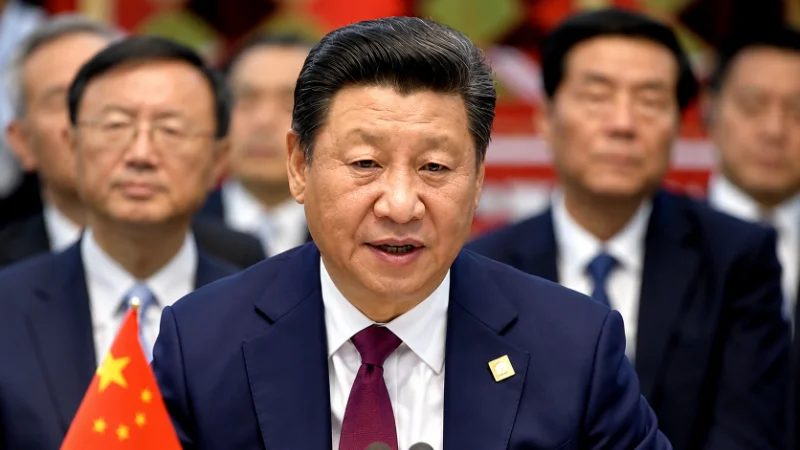
A Congressional Research Service report, as described by The Washington Times in June 2024, says censors quickly remove online content about the wealth of senior officials and their relatives. That helps explain why public records on the families of top leaders are so hard to find.
Why the Wealth Question Follows Xi
Xi built his public image on fighting graft. In a 2004 anti-graft conference call, he told officials to rein in their spouses, children, relatives, friends and staff, and to avoid using power for personal gain.
After he took control of the party in late 2012, he launched an anti-corruption campaign that uncovered cases involving millions of dollars among party officials, their relatives and associates. That record made the Bloomberg story politically sensitive.
The timing mattered too. Bloomberg had reported in April 2012 that Bo Xilai’s family fortune was at least $136 million, less than two months after Bo was removed as Chongqing party chief. Editorials in two Chinese financial publications and microbloggers then called for top officials to disclose their wealth.
Other leaders drew similar reports. The New York Times reported in 2012 that relatives of former Premier Wen Jiabao controlled at least $2.7 billion in assets. Against that figure, the holdings tied to Xi’s relatives were smaller, though the secrecy around both is the same.
A China scholar quoted by The World said public anger comes from unequal access to money-making. That frustration explains why any report on a leader’s family money draws attention.
What Net Worth Means for a Party Leader
Net worth normally counts a person’s own assets minus debts. For the leader of a one-party state, much of what surrounds him is state property that cannot count. Xi’s listed residence is Zhongnanhai, the leadership compound in Beijing, which would not count as personal property in any fair estimate.
That is why estimates built on his salary come out tiny and those built on family investments come out huge. They measure different things, and neither measures what Xi personally owns.
In the United States, presidents file public financial disclosure reports, so anyone can compare a list of holdings with a pay stub. No equivalent exists for Xi. Any figure has to be assembled from outside records on his relatives, if it is assembled at all.
That leaves two honest readings. One is the documented holdings of his relatives, measured in hundreds of millions of dollars of company assets. The other is Xi’s personal wealth, which is unknown. Joining the two into one number is guesswork.
From a Cave House to Zhongnanhai
Xi was born in Beijing on 15 June 1953, the second son of Xi Zhongxun and his wife Qi Xin. China Daily describes his father as a revered Communist Party leader, and Xi has said the elder Xi inspired him. That background makes Xi a “princeling,” the term for the child of a revolutionary veteran.
Exile in Liangjiahe
His father was purged during the Cultural Revolution and imprisoned in 1968, when Xi was 15. In January 1969 Xi left Beijing for Liangjiahe, a village in Yanchuan County, Shaanxi. Xinhua reports he carried a small sewing bag his mother, Qi Xin, had embroidered with a message of her love.
He spent seven years there, lived in a cave dwelling, joined the party after several failed attempts and became the village party secretary. Xi later recalled that his wish then was for villagers to have meat often. Xinhua treats those years as the start of his political career.
Tsinghua and the Provinces
From 1975 to 1979 he studied chemical engineering at Tsinghua University as a worker-peasant-soldier student. CNN lists a Tsinghua law doctorate from 2002 in his record. After graduating he worked as a secretary to the defense minister, then volunteered in 1982 for a grassroots post in Zhengding, a poor county in Hebei.
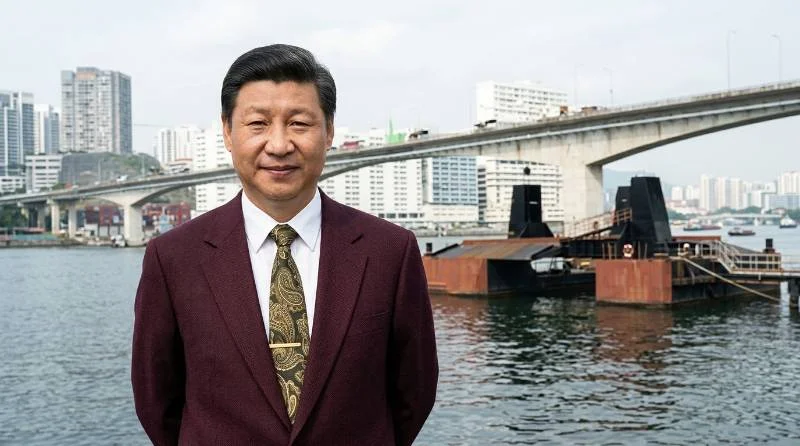
His rise ran through the coast. He became executive vice mayor of Xiamen in 1985, the same year he made his first trip to the United States with an agricultural delegation. He later led Ningde and Fuzhou as party secretary and served as governor of Fujian from 1999 to 2002.
Zhejiang came next, where he was governor and party secretary from 2002 to 2007. In 2007 he spent a short time as Shanghai’s party secretary after the dismissal of his predecessor, Chen Liangyu, then joined the Politburo Standing Committee in October 2007. Xinhua says he spent over 17 years in Fujian and nearly five in Zhejiang, and led local responses to several powerful typhoons along the coast.
From 2007 to 2013 he also headed the Central Party School, and from 2008 to 2013 he served as vice president of China. Those posts placed him next in line behind Hu Jintao.
Family: Peng Liyuan and Xi Mingze
Xi has been married to Peng Liyuan since 1987, and they have one daughter, Xi Mingze. Peng was a famous singer in the People’s Liberation Army before her husband became leader. Xi’s first marriage, to Ke Lingling, ended in divorce.
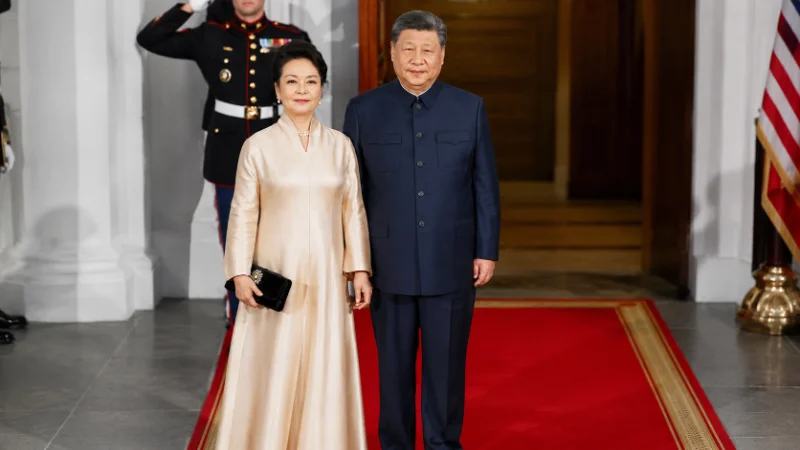
Bloomberg’s 2012 review found no assets traced to Xi, to Peng or to their daughter. The sources used for this article name no property or business held in any of their names.
Xi’s older sister, Qi Qiaoqiao, is the relative whose holdings drew the most attention in the Bloomberg report, which listed her, her husband and her daughter as the main owners.
Power and Legacy
Xi has served as general secretary of the Chinese Communist Party and chairman of the Central Military Commission since 2012, and he is also president of China. He took over as party leader on 15 November 2012, succeeding Hu Jintao.
In October 2017 the party wrote “Xi Jinping Thought on Socialism with Chinese Characteristics for a New Era” into its charter as a guiding principle. It was later incorporated into the national constitution as well. In 2018 he removed term limits for the presidency, and in October 2022 he delivered the political report to the 20th National Congress.
Supporters point to the poverty-alleviation drive, the Belt and Road program and environmental cleanup. David Ferguson, who edited the English translation of “Xi Jinping: The Governance of China,” says these fit Xi’s thought at the grassroots level.
Critics point to the concentration of power under one leader and the tight control of information, including coverage of his own family’s finances. Xi himself has stressed national security and the need for party leadership over the country.
The finance question stays open for a structural reason. China keeps officials’ assets private and restricts reporting on them, so every number online beyond the 2012 records on his relatives is an estimate, and readers should treat it that way.